Power Monitoring
KPM31 single-phase DIN Rail Prepaid Energy Meter integrates data acquisition and control functions
Learn More
With the deepening of digital transformation, smart electricity meters have gradually become an important infrastructure for energy management in chemical enterprises. Compared with traditional electricity meters, smart electricity meters can not only achieve remote meter reading and real-time monitoring, but also use AI algorithms for energy consumption prediction and anomaly diagnosis, providing strong support for enterprises to save energy and reduce consumption.
However, in the high-energy-consumption and high-risk environment of the chemical industry, implementing smart meter projects is not a simple task. So, is it safe to use electricity meters in the chemical industry? Are there any key points to pay attention to? The following article will list several precautions when using electricity meters.
The production systems of chemical enterprises usually involve critical process parameters and power distribution control. Once the data is tampered with or leaked, it may cause serious consequences.
Therefore, when introducing a smart meter system, enterprises need to pay special attention to the following points:
Data encryption and access control: Ensure that the energy consumption data collected by the meter is encrypted with AES or SSL during transmission and storage.
Network isolation strategy: Separate the smart meter system from the production control network to prevent hackers from intruding through IoT devices. Real-time Security Monitoring: Deploy an AI-powered security monitoring platform to promptly identify abnormal traffic or unauthorized access.
Chemical plant areas may already contain equipment from multiple brands and generations. Inconsistent communication protocols will hinder system integration.
Prioritize smart meters that support multiple protocols, such as Modbus, DL/T 645, and MQTT, to facilitate integration with existing SCADA or EMS systems.
A compatibility assessment should be conducted at the initial project stage to confirm seamless communication between the data acquisition terminal, concentrator, and backend system.
If using an AI energy consumption analysis platform, ensure the system has open API interfaces to facilitate subsequent algorithm integration and data fusion.
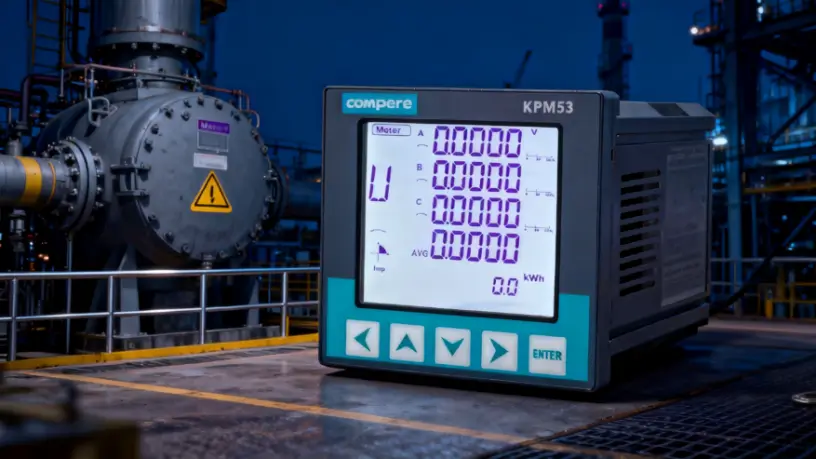
The chemical industry has high requirements for the accuracy of electricity data, as energy billing, equipment operation optimization, and carbon emission accounting all rely on precise data.
It is recommended to select smart meters that comply with **national metrological standards (e.g., GB/T 17215)**.
Configure dual-channel metering and comparison mechanisms for critical circuits and high-energy-consuming equipment to ensure data reliability.
Regularly calibrate and compare electricity meters to prevent errors caused by environmental factors such as temperature and electromagnetic interference.
Smart electricity meters are not only "metering tools" but also entry points for energy data collection. With the help of AI technology, enterprises can achieve:
Energy Consumption Anomaly Identification: Identify abnormally power-consuming equipment or abnormal operating periods through machine learning models.
Load Forecasting and Optimization:AI can predict electricity consumption trends based on historical data, guiding enterprises to optimize production shifts and load allocation.
Carbon Emission Analysis: Combine AI algorithms with electricity data to achieve carbon footprint monitoring and energy-saving strategy formulation.
In chemical enterprises, AI intelligent analysis platforms help energy managers gain a more intuitive understanding of overall electricity consumption, truly achieving a closed loop from data to decision-making.
The chemical plant environment is complex. When implementing smart meter upgrades, safety regulations and construction plans must be considered simultaneously:
Strictly adhere to explosion-proof area construction specifications and select meters and communication equipment that meet explosion-proof requirements.
Coordinate production plans and power outage periods during construction to avoid impacting critical production lines.
Establish a project management mechanism, clearly defining the responsible persons, progress control, and acceptance standards for each stage.
Smart meter systems represent a long-term investment in digital infrastructure.
Chemical enterprises should establish a comprehensive operation and maintenance mechanism: Regularly update software and patch vulnerabilities to maintain system security and performance.
Continuously optimize energy data analysis models using AI algorithms to improve prediction accuracy.
Develop equipment lifecycle management plans and rationally arrange replacement and expansion.
For chemical enterprises, implementing smart meter projects is not only an equipment upgrade but also a crucial step in energy digital transformation. Only by fully considering core factors such as safety, compatibility, accuracy, and intelligent analysis can smart meters truly realize their value, helping enterprises reduce energy costs, improve management efficiency, and provide solid support for green and low-carbon development.

Power Monitoring
KPM31 single-phase DIN Rail Prepaid Energy Meter integrates data acquisition and control functions
Learn More
Power Monitoring
The KPM33 Three-phase DIN-rail 4G Prepaid Energy Meter is designed for DIN-rail mounting.
Learn More
Power Monitoring
The KPM37 4G Three-phase OEM Energy Meter features a 35mm DIN rail mounting design and an LCD display.
Learn MoreCompere provides the integrated energy management solution including online monitoring, analyzing, reporting, controlling, maintenance, production management, prediction, and other functions. We offer u technical support and professional solution at 7*24h service.
Unit 1, Building 38, LIANDONG U Valley, No. 352 Lianhua Street, High-tech Zone, Zhengzhou, China
Our helpline is always open to receive any inquiry or feedback.Please feel free to drop us an email from the form below and we will get back to you as soon as we can.
Compere mainly provides kpm series smart energy meters. If you have any needs, please feel free to contact us.