Power Monitoring
KPM31 single-phase DIN Rail Prepaid Energy Meter integrates data acquisition and control functions
Learn More
As energy costs continue to increase and digital transformation becomes a priority for businesses, more building owners and facility managers are looking for smarter ways to monitor and manage electricity consumption. However, traditional energy monitoring methods often create challenges during installation, especially in existing buildings, large residential communities, and retrofit projects.
A wireless IoT smart energy meter solution provides a flexible alternative by connecting smart electricity meters through wireless communication technologies and enabling real-time data collection, remote meter reading, and centralized energy management. Without complex wiring requirements, organizations can deploy energy monitoring systems faster while gaining better visibility into electricity usage and operational performance.
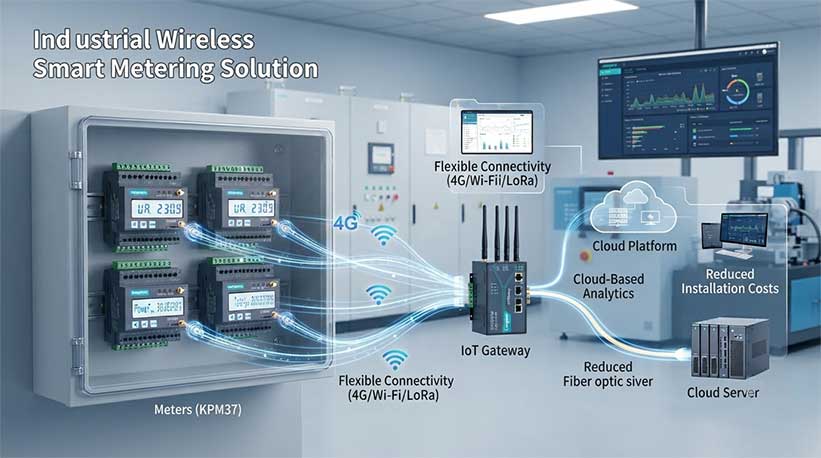
Modern energy management is no longer limited to measuring electricity consumption. Property managers, facility operators, and energy service companies need accurate and continuous energy data to understand consumption patterns, identify inefficiencies, and optimize operational strategies.
However, many existing buildings still rely on traditional meters or manual data collection methods. These approaches make it difficult to obtain timely energy information and prevent organizations from responding quickly to energy waste.
A wireless smart meter solution helps overcome these limitations by creating a connected energy monitoring environment where electricity data can be collected automatically and analyzed through an IoT energy monitoring system.
For newly constructed buildings, communication infrastructure can be planned during the design stage. However, upgrading existing buildings is much more complicated. Many commercial properties, apartment complexes, and industrial facilities were not originally designed with modern energy monitoring systems.
Installing traditional wired monitoring solutions may require additional cable routes, electrical modifications, and construction work. These requirements increase project costs and may interrupt normal building operations.
Wireless IoT smart meter solutions provide a more practical approach for retrofit projects because meters can communicate through wireless networks without requiring extensive wiring changes.
Many organizations manage multiple electricity consumption points, but without real-time monitoring, it is difficult to understand where energy is being used and where improvements can be made.
For example, a commercial building may contain offices, HVAC systems, lighting areas, and public facilities. Without detailed consumption data, facility teams often rely on estimated usage instead of actual energy performance information.
| Facility Type | Typical Monitoring Requirements | Problems Without Real-Time Data |
|---|---|---|
| Office Buildings | Track floor-level electricity usage and identify inefficient areas | Energy-saving opportunities are difficult to discover |
| Apartment Communities | Monitor individual tenant consumption and common facilities | Manual meter management increases workload |
| Industrial Plants | Analyze equipment electricity consumption patterns | High-energy processes are difficult to optimize |
| Commercial Centers | Manage multiple energy-consuming departments | Unexpected consumption increases are difficult to detect |
By implementing a building energy monitoring system with wireless smart meters, organizations can transform electricity data into actionable insights and improve energy management decisions.
Energy monitoring requirements often change over time. A property may need additional meters after expansion, renovation, or the addition of new facilities.
Traditional wired systems usually require extra installation work when new monitoring points are added. This limits flexibility and increases future upgrade costs.
Wireless IoT smart meter solutions offer easier expansion because additional monitoring devices can be integrated into the existing system with less physical infrastructure modification.
A wireless IoT smart meter solution is an integrated energy monitoring approach that uses wireless communication technologies to connect smart electricity meters with digital management platforms. It enables automatic electricity data collection, remote meter reading, and centralized energy analysis.
Unlike traditional meter systems that only record electricity usage locally, wireless IoT smart meters continuously transmit consumption information to management platforms, allowing users to monitor energy performance from a centralized interface.
A typical solution includes the following components:
The system workflow can be summarized as:
Wireless IoT Smart Meter → Wireless Communication Network → Cloud Platform → Energy Management System → Facility Users
One of the most important advantages of a wireless IoT smart meter solution is simplified installation. Traditional wired energy monitoring projects often require extensive cable deployment, while wireless systems can reduce construction requirements and accelerate project completion.
This makes wireless smart meters particularly valuable for retrofit projects where building owners want to improve energy visibility without major renovation work. Facilities can upgrade their energy monitoring capability while maintaining normal operations.
Manual meter inspection is time-consuming, especially in large buildings containing hundreds or thousands of electricity meters. A remote meter reading solution automatically collects electricity consumption information and sends data to a centralized platform.
Facility managers can access meter information remotely, reduce manual inspection workload, and improve operational efficiency. This approach also helps organizations create more accurate energy reports and improve billing management processes.
Real-time electricity monitoring provides organizations with continuous visibility into energy consumption. Instead of waiting for monthly electricity bills, users can understand consumption trends immediately.
With detailed energy data, facility teams can analyze:
This information allows businesses to respond quickly to abnormal consumption and improve energy efficiency.
Energy management is not only about collecting data but also about using data to improve decisions. By integrating wireless smart meters with an energy management solution, organizations can identify inefficient operations and develop targeted energy-saving strategies.
For example, building operators can optimize equipment schedules, adjust energy usage patterns, and reduce unnecessary consumption based on actual monitoring data.
Property managers need efficient tools to handle large numbers of meters and tenant energy information. A wireless IoT smart meter solution reduces manual work, improves data accuracy, and makes daily energy management more efficient.
For building owners, better energy visibility means better control over operating expenses. Energy monitoring data helps identify waste, improve building performance, and support long-term asset value improvement.
Energy service companies require flexible solutions that can be deployed across different customer environments. Wireless IoT smart meter solutions allow ESCOs to provide scalable energy monitoring services without complex installation requirements.
A wireless IoT smart meter solution is an energy monitoring system that connects smart electricity meters with digital platforms through wireless communication technologies. It allows automatic electricity data collection, remote meter reading, and real-time energy monitoring. Compared with traditional systems, it reduces installation complexity and provides greater flexibility for buildings, commercial facilities, and industrial projects that require efficient energy management.
Wireless smart meters reduce the need for complex communication wiring, making installation faster and more cost-effective, especially in existing buildings and retrofit projects. They provide easier system expansion, remote monitoring capabilities, and centralized data management. These advantages help facility managers improve energy visibility while reducing the workload associated with traditional manual meter reading and maintenance processes.
Wireless IoT smart meters can use different communication technologies depending on project requirements. Common options include LoRaWAN, 4G, and WiFi. LoRaWAN is suitable for large-scale projects requiring long communication distances, 4G works well for remote locations, and WiFi is commonly used in smaller buildings with existing wireless networks. The selection depends on coverage requirements, building conditions, and management goals.
Wireless IoT smart meter solutions can be applied in residential buildings, apartment complexes, commercial facilities, industrial plants, campuses, and remote sites. They are especially suitable for projects where traditional wiring is expensive or difficult. By providing remote monitoring, energy data analysis, and centralized management, wireless solutions help different industries improve energy efficiency and reduce operational costs.
A wireless IoT smart meter solution provides a practical way for organizations to modernize energy monitoring and improve operational efficiency. By eliminating many limitations of traditional wired systems, wireless smart meters make it easier to collect electricity data, manage multiple facilities, and optimize energy consumption.
For property managers, building owners, industrial enterprises, and energy service companies, adopting wireless energy monitoring technology creates better visibility into energy usage and supports smarter energy management strategies. As buildings become more connected and data-driven, wireless smart meter solutions will continue to play an important role in efficient building energy management.

Power Monitoring
KPM31 single-phase DIN Rail Prepaid Energy Meter integrates data acquisition and control functions
Learn More
Power Monitoring
The KPM33 Three-phase DIN-rail 4G Prepaid Energy Meter is designed for DIN-rail mounting.
Learn More
Power Monitoring
The KPM37 4G Three-phase OEM Energy Meter features a 35mm DIN rail mounting design and an LCD display.
Learn MoreCompere provides the integrated energy management solution including online monitoring, analyzing, reporting, controlling, maintenance, production management, prediction, and other functions. We offer u technical support and professional solution at 7*24h service.
Unit 1, Building 38, LIANDONG U Valley, No. 352 Lianhua Street, High-tech Zone, Zhengzhou, China
Our helpline is always open to receive any inquiry or feedback.Please feel free to drop us an email from the form below and we will get back to you as soon as we can.
Compere mainly provides kpm series smart energy meters. If you have any needs, please feel free to contact us.