Power Monitoring
KPM31 single-phase DIN Rail Prepaid Energy Meter integrates data acquisition and control functions
Learn More
In the wave of Industry 4.0 and smart manufacturing, factory energy management is shifting from extensive to intensive and digitalized methods. Among these, WiFi energy meters, as plug-and-play and flexibly deployable IoT sensing devices, are becoming a key entry point for factories to achieve digital energy transformation. So, how exactly does this seemingly simple device deeply empower factory energy management and help companies reduce costs and increase efficiency?
Before answering this question, we need to understand the common dilemmas of traditional factory energy management:
"Black Box" Electricity Use: There is only one main meter, and while the total monthly electricity bill is known, the specific usage, timing, and reasons for electricity consumption remain unknown.
Reliance on Manual Meter Reading: Inefficient, prone to errors, and the data is isolated, failing to form an analyzable database.
Management Lag: Problems are only discovered at the end of the month when the electricity bill is received, which is too late for process intervention.
Unable to pinpoint waste: The inability to distinguish between production electricity consumption, auxiliary electricity consumption, and ineffective losses leads to a lack of data support for energy-saving renovations.
The emergence of WIFI energy meters aims to break through these limitations, ushering in a new era of real-time, visible, analyzable, and optimizable energy management.
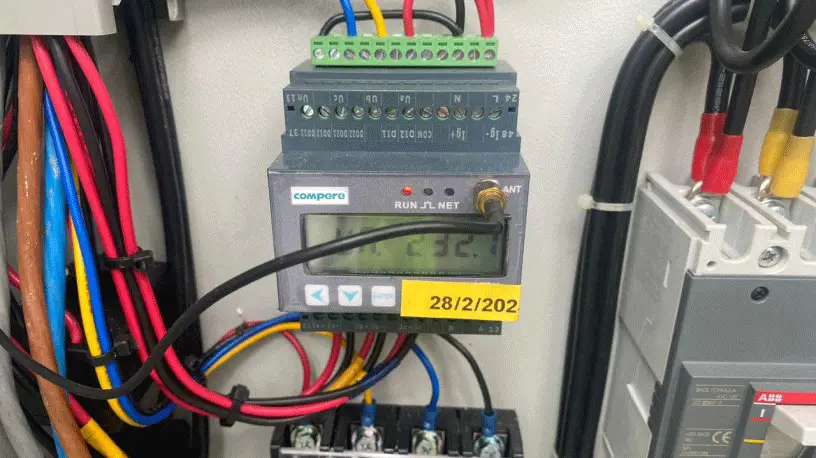
How it Helps: By installing WIFI energy meters on the main power line, in each workshop, on each production line, and even on key large equipment (such as air compressors, central air conditioning, and injection molding machines), managers can view a "dynamic map" of the entire factory's energy flow in real time via a mobile app or computer dashboard.
Value Brought:
Clear Overview: A clear understanding of the energy consumption percentage of each accounting unit, quickly identifying the highest energy-consuming "electricity hogs."
Departmental Responsibility: Linking energy consumption data with production departments, establishing a scientific energy consumption assessment system, and enhancing energy-saving awareness among all employees.
How it Helps: WIFI energy meters can accurately record electricity consumption at every moment. Factories can analyze their electricity consumption habits during different time periods based on the grid's peak, flat, and valley electricity pricing policies.
Value Brought:
Peak Shaving and Valley Filling: Through data analysis, production tasks that can be scheduled (such as preheating and charging) can be shifted to off-peak or normal electricity periods when electricity prices are lower, proactively avoiding peak hours and resulting in direct and significant electricity cost savings.
Demand Management: Real-time monitoring of maximum demand avoids expensive demand charges due to excessive short-term load and allows for proactive load scheduling through alarm functions.
How it Helps: Equipping each core production piece of equipment with a WIFI energy meter is equivalent to creating an "energy ID card" for it. It can accurately measure the equipment's standby power consumption, energy consumption per unit, and operating energy efficiency ratio.
Value Brought:
Energy Efficiency Benchmarking: By comparing the unit energy consumption of similar equipment, abnormally high-energy-consuming equipment can be identified, allowing for timely maintenance or replacement.
Process Optimization: By analyzing energy consumption data under different process parameters, the optimal balance between energy consumption and output can be found, optimizing production processes.
Reducing Standby Waste: Precisely locate and manage equipment that generates significant standby power consumption during non-production hours.
How it Helps: Parameters such as current, voltage, and power factor monitored by the WIFI energy meter serve as a "barometer" of equipment operating status. Once equipment shows signs of aging, wear, or impending failure, its power curve will typically exhibit abnormal changes.
Value Brought:
Predictive Maintenance: By analyzing data such as current harmonics and three-phase imbalance, potential faults in components such as motors and bearings can be predicted, shifting from "reactive maintenance" to "preventative maintenance," reducing unplanned downtime.
Safety Alarms: By setting thresholds for current overload, abnormal voltage, etc., the system automatically alarms when equipment malfunctions, effectively preventing electrical fires and production accidents.
How it Helps: All data collected through WIFI energy meters is automatically stored in the cloud, forming the factory's "energy big data" asset.
Value Brought:
Energy Saving Verification: After energy-saving renovations (such as replacing motors with high-efficiency ones or installing frequency converters), the return on investment of energy-saving projects can be quantitatively evaluated through precise comparison of data before and after the renovation.
Data-Driven Decision-Making: Provides solid data support for major decisions such as future capacity planning, equipment procurement, and energy budgeting, avoiding "gut feeling" decisions.
In industrial scenarios, the deployment of WIFI energy meters has significant advantages:
Flexible Deployment and Low Cost: No complex communication wiring is required; access can be quickly achieved using the factory's existing WIFI network, greatly reducing installation costs and construction time, making it particularly suitable for renovation projects.
Plug and Play, Easy Expansion: When adding monitoring points, only the new meter needs to be installed and connected to the network; the system has extremely high scalability.
High data real-time performance: Based on IP network transmission, data latency is low, meeting the needs of real-time monitoring and alarms.
In summary, the WIFI energy meter is far more than a simple metering tool. It is the "nerve ending" of factory energy management, the "capillary" that connects the data chain. Through wireless and digital means, it transforms the traditional energy cost center into a strategic center that can continuously optimize and create value through data.
Under the dual pressures of rising energy prices and carbon neutrality goals, investing in WIFI energy meters and their energy management systems is no longer an optional choice, but an inevitable one for factories to enhance their core competitiveness and achieve sustainable development.

Power Monitoring
KPM31 single-phase DIN Rail Prepaid Energy Meter integrates data acquisition and control functions
Learn More
Power Monitoring
The KPM33 Three-phase DIN-rail 4G Prepaid Energy Meter is designed for DIN-rail mounting.
Learn More
Power Monitoring
The KPM37 4G Three-phase OEM Energy Meter features a 35mm DIN rail mounting design and an LCD display.
Learn MoreCompere provides the integrated energy management solution including online monitoring, analyzing, reporting, controlling, maintenance, production management, prediction, and other functions. We offer u technical support and professional solution at 7*24h service.
Unit 1, Building 38, LIANDONG U Valley, No. 352 Lianhua Street, High-tech Zone, Zhengzhou, China
Our helpline is always open to receive any inquiry or feedback.Please feel free to drop us an email from the form below and we will get back to you as soon as we can.
Compere mainly provides kpm series smart energy meters. If you have any needs, please feel free to contact us.