Power Monitoring
KPM31 single-phase DIN Rail Prepaid Energy Meter integrates data acquisition and control functions
Learn More
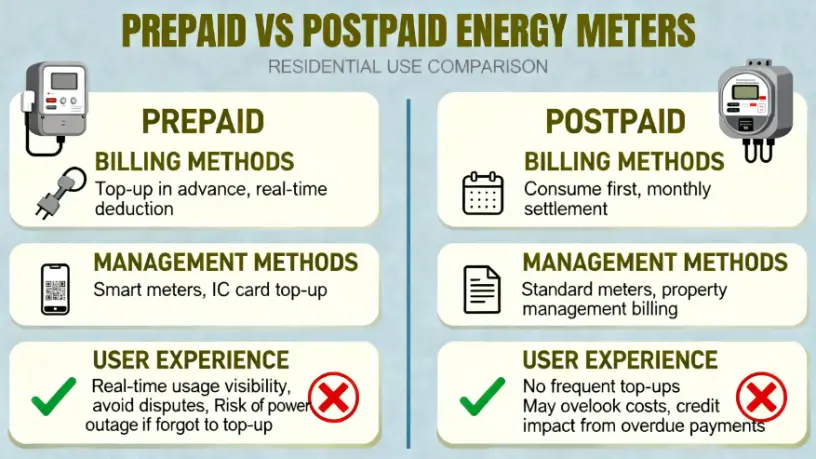
With the widespread adoption of smart energy meters, residential users are now primarily divided into prepaid and postpaid electricity metering and payment methods. These two methods differ in terms of user experience, management methods, and billing characteristics.
Prepaid Meter
Users must top up their electricity bill in advance (similar to mobile phone top-ups). The balance in the meter is deducted in real time as their electricity usage decreases. When the balance is insufficient, the system will issue an overdue payment reminder or automatically shut off the power supply. Users must top up their balance in time before continuing to use electricity.
Postpaid Meter
Users consume electricity first and pay later. The system automatically reads the meter regularly (e.g., monthly), calculates the amount of electricity consumed and the amount due, and the property management or power supply department then notifies the user to pay. This model is similar to the traditional "month-end settlement" method.
Prepaid Meter
Prepaid energy meters are generally prepaid smart meters that can be topped up via IC cards, WeChat, Alipay, or the property management system. The system automatically records electricity consumption, electricity charges, and remaining balance, making it convenient for users to manage their electricity consumption. Management does not need to collect electricity bills, reducing labor costs and the risk of overdue payments.
Postpaid electricity meters
Mostly use standard smart meters or remote meter reading systems, with the property management or power supply company handling the billing. While convenient for users, management bears the burden of collecting payments and managing bills.
Prepaid users
Advantages: Top up and use immediately, avoiding disputes caused by power outages due to unpaid bills; real-time visibility into electricity usage and expenses; and greater energy conservation.
Disadvantages: If you forget to top up, you may experience power outages due to insufficient balance.
Postpaid users
Advantages: No need for frequent top-ups, and the user experience is closer to traditional methods.
Disadvantages: It's easy to overlook electricity costs, and chronic overdue payments can affect your credit or lead to power outages.
Overall, prepaid electricity meters are more intelligent, transparent, and easy to manage, making them particularly suitable for modern residential communities and individual metering scenarios. Postpaid models, on the other hand, are still suitable for traditional residential buildings with centralized management or areas that haven't yet upgraded to smart meters. Both methods have their advantages, and choosing the right billing model can effectively improve user experience and community management efficiency.

Power Monitoring
KPM31 single-phase DIN Rail Prepaid Energy Meter integrates data acquisition and control functions
Learn More
Power Monitoring
The KPM33 Three-phase DIN-rail 4G Prepaid Energy Meter is designed for DIN-rail mounting.
Learn More
Power Monitoring
The KPM37 4G Three-phase OEM Energy Meter features a 35mm DIN rail mounting design and an LCD display.
Learn MoreCompere provides the integrated energy management solution including online monitoring, analyzing, reporting, controlling, maintenance, production management, prediction, and other functions. We offer u technical support and professional solution at 7*24h service.
Unit 1, Building 38, LIANDONG U Valley, No. 352 Lianhua Street, High-tech Zone, Zhengzhou, China
Our helpline is always open to receive any inquiry or feedback.Please feel free to drop us an email from the form below and we will get back to you as soon as we can.
Compere mainly provides kpm series smart energy meters. If you have any needs, please feel free to contact us.