Power Monitoring
KPM31 single-phase DIN Rail Prepaid Energy Meter integrates data acquisition and control functions
Learn More
The steel industry is a typical energy-intensive industry, with electricity costs accounting for a very high proportion of total production costs. Under the "dual carbon" target (carbon reduction and emission reduction), energy conservation and emission reduction are not only a social responsibility but also a core competitiveness related to the survival and development of enterprises. Traditional mechanical meters can only provide total electricity consumption, while smart 4g electricity meter, as a core component of the Industrial Internet of Things (IIoT), can collect, transmit, and analyze detailed electricity consumption data in real time (such as voltage, current, power factor, and time-of-use consumption), providing a data foundation for steel enterprises to achieve refined energy management.
However, deploying smart electricity meters is not a simple matter of "installing them and forgetting about it." Successfully applying smart meters in the complex and harsh environment of steel production requires careful planning and consideration. The following are several crucial precautions:
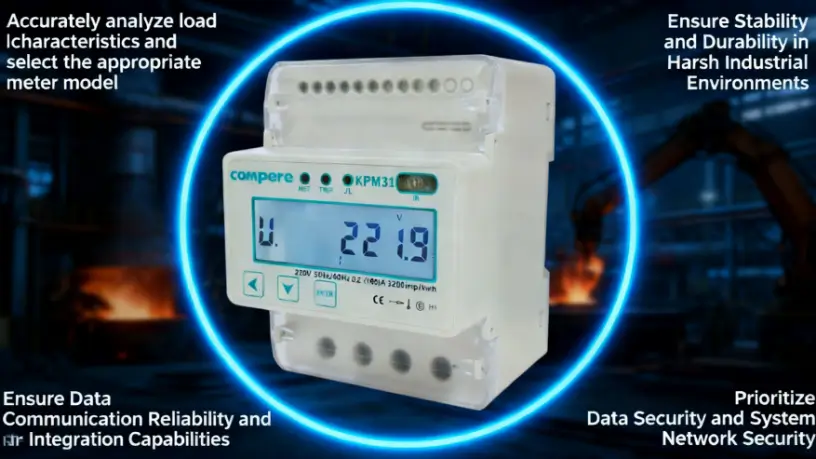
The electrical equipment in steel plants is diverse, with vastly different load characteristics:
Impact loads: such as electric arc furnaces and refining furnaces, experience extremely large current fluctuations during startup and operation, generating significant harmonics.
Inductive loads, such as large motors, pumps, and fans, can lead to low power factors.
Important Note: When selecting smart power meters, it is essential to ensure that their technical specifications match the load characteristics. For example, for equipment like electric arc furnaces, meters capable of withstanding high current surges, possessing high sampling rates, and strong harmonic measurement capabilities are necessary. Ordinary commercial-grade meters are likely to fail quickly or produce inaccurate data under harsh operating conditions.
The harsh environment of steel production sites poses a severe challenge to the hardware of smart meters:
High Temperature and Humidity: The ambient temperature in steelmaking and continuous casting areas is extremely high.
Dust and Metal Dust: Large amounts of conductive metal dust can cause short circuits or interference.
Electromagnetic Interference: High-power equipment generates strong electromagnetic fields during operation.
Precautions:
1. Select meters with high protection ratings, such as IP54 or higher, to prevent dust and moisture intrusion. The meter casing material should be corrosion-resistant and flame-retardant. Simultaneously, the meter itself should have good electromagnetic interference resistance and be securely installed to withstand vibration.
2. Ensure Data Communication Reliability and Integration Capabilities
The value of smart meters lies in data flow. The key is how to stably and in real-time transmit distributed meter data to the central management system.
Precautions: Communication Protocol: Ensure the selected meters support open international standard protocols, such as Modbus-RTU/TCP, Profibus-DP, etc., for easy integration into existing energy management systems or plant monitoring systems.
Communication Method: Select appropriate communication methods based on the plant layout, such as RS-485 wired networking, industrial Ethernet, or wireless solutions such as LoRa, 4G/5G, etc., in areas with difficult wiring. For wireless solutions, signal coverage and stability should be given priority.
3. Prioritize Data Security and System Network Security
Smart electricity meter network access also introduces new security risks. An attack could lead to production data breaches or even power outages.
Physical Security: Meter boxes should be locked to prevent unauthorized access.
Network Security: Logically or physically isolate the meter network from the company's office network, deploy an industrial firewall, and restrict unnecessary network access.
Data Encryption: Prioritize meters and systems that support encrypted data transmission.
Summary: Deploying smart electricity meters in the steel industry is a complex undertaking. Its success depends on a deep understanding and proper handling of six key aspects: load characteristics, industrial environment, site planning, communication integration, network security, and data analysis. Through careful planning and continuous operational optimization, smart power meters will no longer be cold metering tools, but powerful engines for steel companies to move towards green, efficient, and intelligent production, ultimately achieving significant energy savings, cost reductions, and enhanced competitiveness.

Power Monitoring
KPM31 single-phase DIN Rail Prepaid Energy Meter integrates data acquisition and control functions
Learn More
Power Monitoring
The KPM33 Three-phase DIN-rail 4G Prepaid Energy Meter is designed for DIN-rail mounting.
Learn More
Power Monitoring
The KPM37 4G Three-phase OEM Energy Meter features a 35mm DIN rail mounting design and an LCD display.
Learn MoreCompere provides the integrated energy management solution including online monitoring, analyzing, reporting, controlling, maintenance, production management, prediction, and other functions. We offer u technical support and professional solution at 7*24h service.
Unit 1, Building 38, LIANDONG U Valley, No. 352 Lianhua Street, High-tech Zone, Zhengzhou, China
Our helpline is always open to receive any inquiry or feedback.Please feel free to drop us an email from the form below and we will get back to you as soon as we can.
Compere mainly provides kpm series smart energy meters. If you have any needs, please feel free to contact us.