Power Monitoring
KPM31 single-phase DIN Rail Prepaid Energy Meter integrates data acquisition and control functions
Learn More
In the intelligent water and electricity transformation of industrial plants, smart water and electricity meters are the "front-end sentinels" of data collection. Their performance directly determines the operating efficiency and data accuracy of the subsequent intelligent management system. Many companies easily fall into the trap of "only looking at price" or "blindly pursuing functions" when selecting meters, resulting in equipment that does not match actual needs and increases transformation costs. Today, we will outline the scientific selection logic for smart water and electricity meters to help companies choose the right core equipment.
The first step in selection is to move beyond the "equipment parameters" themselves and focus on the actual usage scenario of the plant. Different industrial plants vary greatly in production scale, water and electricity load, and management needs. Three core issues must be clarified first:
Metering Accuracy Requirements: If the plant contains high-energy-consuming production equipment (such as heavy machinery or high-temperature furnaces), higher accuracy meters (ideally no lower than 0.5S) and water meters should be selected to avoid distorted energy consumption data due to metering errors. For ordinary light industrial plants, basic accuracy level equipment is sufficient.
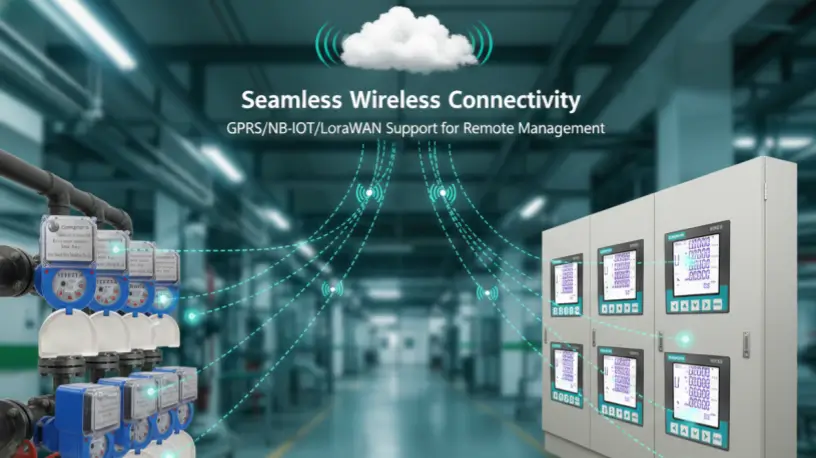
Data Transmission Requirements: It is necessary to confirm whether the smart electricity meters water meters esupport existing or planned communication protocols in the plant (such as LoRa, NB-IoT, RS485, etc.). For example, when the plant area is large and the equipment is widely distributed, wireless communication (such as NB-IoT) meters should be prioritized to reduce wiring costs. If the plant is located in an area with weak signal, RS485 wired communication can be considered to ensure data transmission stability.
Management Function Requirements: Clearly define whether the equipment needs special functions—such as whether the electricity meter needs to support multi-period metering (peak-valley-flat) for easier energy consumption analysis and cost allocation, whether the water meter needs to support leakage alarms (to prevent pipe leaks), and whether the equipment needs data storage during power outages or network interruptions (to prevent data loss). More functions are not necessarily better; meeting management needs is key.
After clarifying the requirements, focus on the core technical parameters of the smart water and electricity meters. These are the "hard indicators" of equipment performance:
Measuring Range: The electricity meter must match the actual current and voltage load of the plant to avoid overload damage due to an insufficient range, or decreased metering accuracy at low loads due to an excessive range. For the water meter, confirm that the nominal diameter matches the pipe specifications, and pay attention to whether the "minimum flow" and "common flow" are appropriate for the plant's water usage scenarios to prevent inability to measure low flow rates.
Data Accuracy and Stability: Prioritize products with national metrological certification to ensure compliance with national standards. Pay close attention to the device's "error range," for example, the error of electricity meters under different load rates must be controlled within the standard range, and the error of water meters under common flow rates should not exceed ±2%. Furthermore, the device's operating temperature range must be suitable for the factory environment to avoid data drift caused by environmental factors.
Power Consumption and Battery Life (for wireless devices): If choosing wireless smart water and electricity meters, pay attention to the device's power consumption level and battery life. In industrial scenarios, the installation location often makes battery replacement difficult; therefore, it is recommended to choose products with low power consumption and long battery life to reduce later maintenance costs.
Smart water and electricity meters do not operate independently; their data needs to be connected to the factory's smart water and electricity management platform. Therefore, "compatibility" is an easily overlooked but crucial point:
Protocol Compatibility: Confirm whether the communication protocols (such as Modbus-RTU, MQTT, etc.) supported by the electricity and water meters are consistent with the management platform's protocol, or whether protocol conversion can be performed through a gateway. Incompatible protocols may prevent data uploads, creating "data silos" and wasting investment in upgrades.
Expanding Compatibility: Considering future factory expansion needs, choose smart water and electricity meters that support "multi-device networking" and "batch management." For example, support managing different areas and types of water and electricity meters through a unified platform, facilitating rapid integration when adding new devices later without needing to repeatedly build a management system.
Finally, here are some common selection pitfalls to help companies avoid unnecessary detours:
Pitfall 1: Focusing solely on price while ignoring quality: Low-priced equipment may have issues with metering accuracy and stability, potentially leading to inaccurate data, biased energy consumption analysis, or even requiring replacement, thus increasing overall costs. Within budget, prioritize reputable, market-proven products.
Pitfall 2: Blindly pursuing "full functionality": Some companies believe more features mean more cost-effectiveness, but many features that don't meet actual needs not only increase costs but may also complicate operation and reduce management efficiency. Choosing based on actual needs is the optimal solution.
Myth 3: Neglecting Post-Maintenance: When selecting equipment, pay attention to its "maintainability," such as whether it supports remote firmware upgrades and has self-diagnostic capabilities. These details can significantly reduce the manpower and time costs of post-maintenance.
Smart water meters and smart electricity meters are the "data entry points" for smart water and electricity system upgrades in industrial plants. Choosing the right equipment lays a solid foundation for subsequent energy consumption analysis, intelligent control, and safety assurance. When selecting equipment, companies need to comprehensively assess their own scenarios, core needs, and compatibility requirements, avoiding common pitfalls, to ensure that smart water and electricity system upgrades are truly implemented effectively and help the plant achieve its efficient and energy-saving management goals.

Power Monitoring
KPM31 single-phase DIN Rail Prepaid Energy Meter integrates data acquisition and control functions
Learn More
Power Monitoring
The KPM33 Three-phase DIN-rail 4G Prepaid Energy Meter is designed for DIN-rail mounting.
Learn More
Power Monitoring
The KPM37 4G Three-phase OEM Energy Meter features a 35mm DIN rail mounting design and an LCD display.
Learn MoreCompere provides the integrated energy management solution including online monitoring, analyzing, reporting, controlling, maintenance, production management, prediction, and other functions. We offer u technical support and professional solution at 7*24h service.
Unit 1, Building 38, LIANDONG U Valley, No. 352 Lianhua Street, High-tech Zone, Zhengzhou, China
Our helpline is always open to receive any inquiry or feedback.Please feel free to drop us an email from the form below and we will get back to you as soon as we can.
Compere mainly provides kpm series smart energy meters. If you have any needs, please feel free to contact us.