Power Monitoring
KPM31 single-phase DIN Rail Prepaid Energy Meter integrates data acquisition and control functions
Learn More
Traditionally, electricity meters are simply considered terminal devices for measuring electricity. However, in today's world where IoT technology is reshaping energy management, WiFi smart meters have undergone a significant role transformation—they are not only electricity data collectors but also the core hub of the entire IoT integration solution. This article will delve into how smart lot WiFi energy meters have evolved from edge devices to system cores, and how IoT solution integrators can leverage this hub to unlock the value of their data.
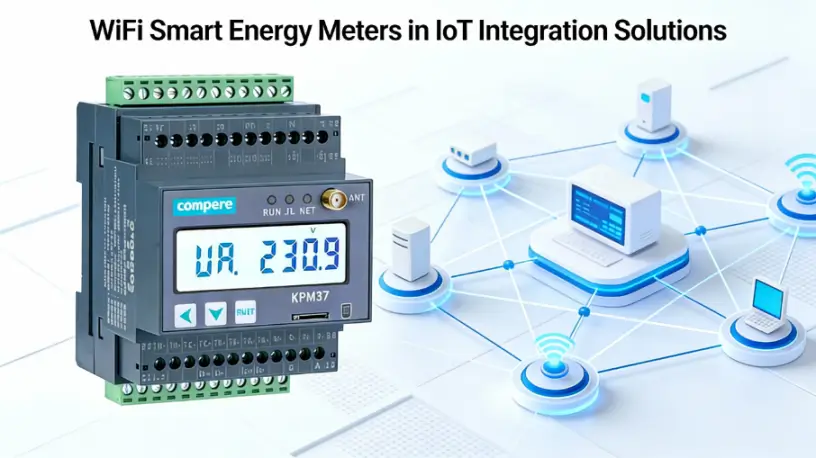
Plug-and-Play Deployment: Based on widely available WiFi infrastructure, no separate network is required, significantly reducing installation complexity and initial costs.
Protocol Compatibility: Supports standard IoT protocols such as MQTT, HTTP/S, and WebSocket, easily connecting to mainstream IoT platforms.
Adaptive Connection: Equipped with network quality monitoring and automatic reconnection mechanisms to ensure stable and reliable data channels.
Multi-Dimensional Data Acquisition: In addition to basic electricity consumption, it can collect more than 50 electrical parameters such as voltage, current, power factor, and harmonics.
Edge Computing Capabilities: Data cleaning, anomaly detection, and preliminary analysis are completed on the device side, reducing cloud pressure.
Configurable Sampling Frequency: Flexible adjustment from second to hourly levels to meet the refined management needs of different scenarios.
Real-time Command Response: Supports remote power on/off, rate switching, parameter configuration, and other control functions.
Firmware Over-the-Air (FOTA): Enables seamless deployment of feature iterations and security patches.
Event-Driven Communication: Triggers immediate reporting of abnormal events (such as sudden power outages or equipment failures).
End-to-End Encryption: Employs standard encryption schemes such as TLS/SSL and AES-128.
Multi-layer Authentication Mechanism: Multiple layers of protection including device authentication, user authentication, and data signature.
Global Certification Support: CE, FCC, RoHS, and metrology certifications in various countries.
First Layer: Basic Data Layer (Original Value)
Accurate Metering Data: Provides a legal basis for billing and settlement.
Equipment Operating Status: Real-time monitoring of equipment health.
Electricity Consumption Behavior Characteristics: Basic data for forming user electricity consumption profiles.
Second Layer: Analysis and Insight Layer (Derived Value)
Data Flow Example:
Real-time Meter Data → Edge Preprocessing → Cloud Aggregation and Analysis → Visualized Reports ↓ Energy Efficiency Diagnostic Report → Energy Saving Optimization Suggestions → Predictive Maintenance Early Warning
Third Layer: Business Application Layer (Scenario Value)
Smart Buildings: Energy Consumption Management and Optimization Based on Sub-metering
Industrial IoT: Equipment Energy Efficiency Monitoring and Production Scheduling Optimization
Smart Communities: Public Facility Electricity Allocation and Abnormal Electricity Consumption Identification
New Retail: Store Energy Cost Analysis and Equipment Management
Host Role Manifestations:
Data Standardization Entry Point: Unifying meter data from different brands and models into a standard format
Multi-System Data Bridge: Connecting BMS (Building Management System), EMS (Energy Management System), and ERP systems
Control Command Distribution Center: Receiving platform commands and distributing them to specific devices
Case Value: A commercial complex achieved 15% annual energy savings and a 40% reduction in maintenance manpower through a WiFi smart meter hub.
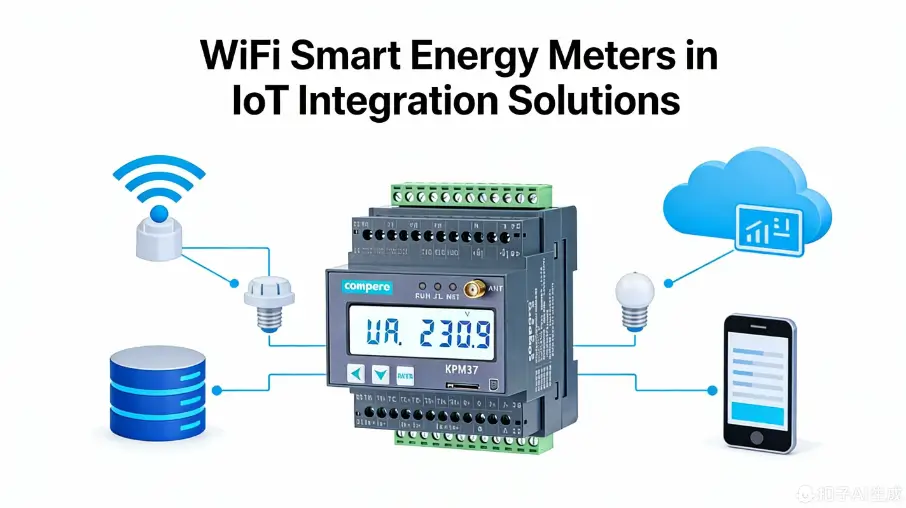
Hydropower Role:
Microgrid Status Awareness: Real-time monitoring of power flow from photovoltaic power generation, energy storage, and loads.
Demand Response Actuator: Receives grid dispatch instructions and adjusts electricity load.
Energy Efficiency Optimization Controller: Automatically adjusts equipment operating modes to achieve optimal energy efficiency.
Technical Implementation: Builds a self-organizing network system in areas without public WiFi through WiFi Mesh networking.
Host Role:
Production Equipment Energy Efficiency Labels: Establishing energy consumption profiles for each piece of equipment.
OEE (Overall Equipment Effectiveness) Calculation Input: Providing energy consumption data for equipment operation.
Predictive Maintenance Trigger: Identifying potential equipment failures based on abnormal energy consumption patterns.
Technical Evaluation Dimensions
Communication Reliability: Packet loss rate <1%, reconnection time <30 seconds
Data Accuracy: Meets national metrological standards (typically 0.5S or Level 1)
Concurrent Processing Capability: Supports simultaneous data reporting from multiple platforms.
Security Architecture: Hardware-level security chip, secure startup process.
Ecosystem Evaluation Dimensions
Openness: API documentation completeness, richness of sample code.
Certification Completeness: Required certifications for the target market.
Partner Network: Compatibility certifications with other IoT component suppliers.
Developer Support: Technical community activity, ticket response speed.
Business Evaluation Dimensions
Total Cost of Ownership: The full lifecycle cost including hardware, installation, maintenance, and cloud service fees.
Scalability: Software upgrade path, hardware interface reservation.
Supplier Stability: Company strength, R&D investment, product roadmap.
For IoT solution integrators, fully unlocking the hub value of WiFi smart meters requires:
Short-term Strategy:
Long-term Strategy:
Ultimate Vision: Future WiFi smart meters will become the entry point for "energy digital twins" in every physical space, and integrators will be the architects and operators of these digital twins. By deeply exploring the value of this core hub, IoT solutions will truly achieve the leap from "connecting everything" to "empowering everything."

Power Monitoring
KPM31 single-phase DIN Rail Prepaid Energy Meter integrates data acquisition and control functions
Learn More
Power Monitoring
The KPM33 Three-phase DIN-rail 4G Prepaid Energy Meter is designed for DIN-rail mounting.
Learn More
Power Monitoring
The KPM37 4G Three-phase OEM Energy Meter features a 35mm DIN rail mounting design and an LCD display.
Learn MoreCompere provides the integrated energy management solution including online monitoring, analyzing, reporting, controlling, maintenance, production management, prediction, and other functions. We offer u technical support and professional solution at 7*24h service.
Unit 1, Building 38, LIANDONG U Valley, No. 352 Lianhua Street, High-tech Zone, Zhengzhou, China
Our helpline is always open to receive any inquiry or feedback.Please feel free to drop us an email from the form below and we will get back to you as soon as we can.
Compere mainly provides kpm series smart energy meters. If you have any needs, please feel free to contact us.