Power Monitoring
KPM31 single-phase DIN Rail Prepaid Energy Meter integrates data acquisition and control functions
Learn More
Selecting the right industrial electricity meter is an important decision for factories, commercial facilities, and industrial power systems. A suitable energy meter not only provides accurate electricity measurement but also helps businesses monitor energy consumption, improve operational efficiency, and identify potential energy waste.
With the increasing demand for industrial energy monitoring, smart energy meters have become essential devices for power distribution systems. However, different applications require different meter types, accuracy levels, communication methods, and installation designs.
This industrial electricity meter selection guide explains the key factors to consider when choosing an energy meter for industrial applications, including electrical system type, current measurement method, accuracy class, communication protocol, installation method, and application requirements.
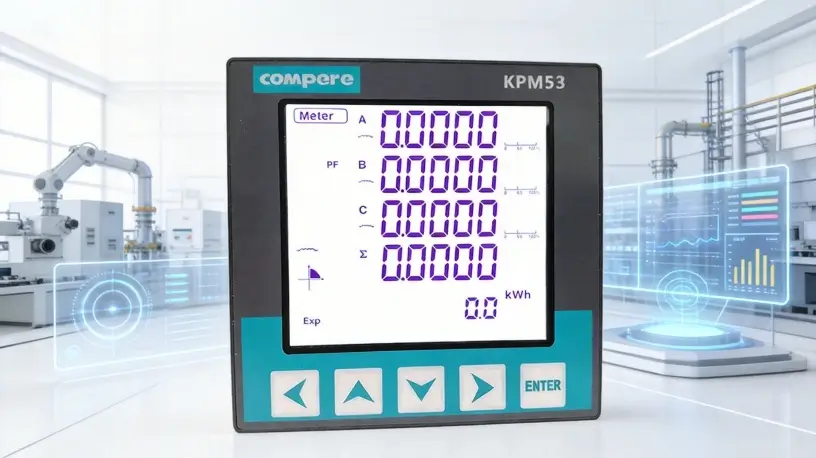
Industrial facilities usually contain multiple electrical loads, including motors, production equipment, HVAC systems, lighting systems, and auxiliary machines. Without accurate energy measurement, it is difficult to understand electricity consumption patterns and optimize energy usage.
The right industrial electricity meter can help businesses achieve:
Industrial electricity meters are available in different designs to meet various electrical systems and monitoring requirements. Understanding the differences between meter types is the first step in selecting the right solution.
Single phase electricity meters are commonly used for low-power applications where electrical loads are relatively small. They are suitable for monitoring individual circuits, lighting systems, offices, and auxiliary equipment.
Typical applications include:
Three phase electricity meters are the most common choice for industrial applications because most factories and industrial facilities operate with three phase power systems.
They are designed for measuring electrical parameters in high-power environments, including:
When selecting a three phase energy meter, users should confirm the electrical system type, such as three phase three-wire or three phase four-wire systems.
A multi circuit energy meter allows users to monitor multiple electrical circuits through one meter device. It is an ideal solution for applications that require centralized monitoring of multiple feeders or branch circuits.
Common applications include:
Compared with installing multiple independent meters, multi circuit energy meters can reduce installation space and simplify energy data management.
DIN rail energy meters are designed for compact installation inside electrical distribution cabinets. Because of their standardized mounting design, they are widely used in modern power distribution systems.
Advantages include:
Choosing an industrial electricity meter requires considering more than just measurement range. The following factors should be evaluated before purchasing.
The first step is identifying the electrical system where the meter will be installed. Different power systems require different meter specifications.
| Electrical System | Recommended Meter Type | Typical Application |
|---|---|---|
| Single Phase System | Single Phase Energy Meter | Small loads, offices, auxiliary equipment |
| Three Phase System | Three Phase Energy Meter | Factories, motors, production equipment |
| Multiple Branch Circuits | Multi Circuit Energy Meter | Factory sub-metering and distribution monitoring |
Current measurement is another important factor when selecting an industrial electricity meter. The choice depends on the current level of the electrical load.
Direct connection meters measure current directly through the meter terminals. They are suitable for applications with relatively low current requirements.
For industrial equipment with high current loads, CT (Current Transformer) operated energy meters are commonly used. The current transformer reduces the current to a measurable level, allowing safe and accurate measurement.
CT operated meters are widely applied in:
Accuracy class determines how precisely an electricity meter measures energy consumption. The required accuracy depends on the application purpose.
| Accuracy Class | Recommended Application |
|---|---|
| Class 1.0 | General energy monitoring |
| Class 0.5 | Industrial energy management and sub-metering |
| Class 0.5S | Higher accuracy measurement and billing applications |
| Class 0.2S | Precision measurement and critical power monitoring |
For industrial users who require accurate energy analysis, selecting the appropriate accuracy class can significantly improve measurement reliability.
id="n9d6xq"Modern industrial electricity meters are no longer only measurement devices. They are increasingly used as data collection terminals in industrial energy monitoring systems. Therefore, selecting the right communication method is important for future data integration and remote monitoring.
Common communication options include:
| Communication Method | Features | Typical Applications |
|---|---|---|
| RS485 Modbus RTU | Reliable wired communication with strong compatibility | Factories, electrical cabinets, industrial automation |
| Modbus TCP | Ethernet-based communication for network integration | Large industrial facilities and monitoring systems |
| LoRaWAN | Long-range wireless communication with low power consumption | Remote meter reading and wireless monitoring |
| 4G Communication | Cellular communication without local network limitations | Remote sites and distributed facilities |
For industrial applications, RS485 Modbus is still one of the most widely adopted communication methods because of its stability, long transmission distance, and compatibility with many industrial devices.
Different industrial applications require different levels of measurement information. Basic energy meters usually measure electricity consumption, while advanced smart energy meters can provide detailed electrical parameters.
Common measurement parameters include:
For factories and industrial facilities, meters with comprehensive measurement functions can provide deeper insights into electricity usage and equipment operation.
Installation design is another important factor when selecting an industrial electricity meter. The meter should match the existing electrical cabinet structure and installation requirements.
DIN rail meters are commonly installed inside distribution panels and control cabinets. They are suitable for compact installations where space is limited.
Panel mounted meters are typically installed on electrical panels with front display requirements. They are commonly used for industrial control rooms and power distribution cabinets.
Different industrial environments have different energy monitoring requirements. The following recommendations can help users select a suitable electricity meter.
Factories usually have multiple production machines, motors, and high-power electrical equipment. Energy meters used in manufacturing environments should focus on measurement accuracy, communication capability, and reliability.
Recommended meter features:
Commercial buildings often require energy monitoring for different areas, tenants, or electrical zones. Multi circuit energy meters and DIN rail energy meters are commonly used for this purpose.
Typical applications include:
Data centers require highly reliable power monitoring because even small power abnormalities can affect operation efficiency.
Recommended features include:
Telecom sites often require remote energy monitoring because equipment locations may be distributed across different areas. Wireless communication options such as 4G or LoRaWAN can simplify installation and reduce wiring costs.
The lowest-cost meter may not always be the most suitable choice. Industrial applications require reliable measurement, stable communication, and long service life. A meter with insufficient accuracy or limited communication options may create additional costs in the future.
Industrial facilities often expand production capacity over time. When selecting a meter, users should consider future requirements, including higher current capacity, additional monitoring points, and communication integration.
Using an unsuitable accuracy class may result in inaccurate energy data. For energy analysis and cost allocation, higher accuracy meters are usually recommended.
Before purchasing an industrial electricity meter, users should confirm whether the communication protocol is compatible with existing monitoring systems or data platforms.
Before selecting an industrial energy meter, consider the following checklist:
| Selection Item | Questions to Consider |
|---|---|
| Electrical System | Is the application single phase or three phase? |
| Current Measurement | Is direct connection or CT connection required? |
| Accuracy Requirement | What accuracy class is suitable for the application? |
| Communication | Does the meter support RS485, Modbus, LoRaWAN, or 4G? |
| Installation | Is DIN rail mounting or panel mounting required? |
| Application | Is the meter used for monitoring, billing, or energy analysis? |
Three phase electricity meters are the most common choice for industrial applications because factories and industrial facilities usually operate with three phase power systems. For high-current applications, CT operated energy meters are commonly used.
To choose the right industrial electricity meter, consider the electrical system type, current range, accuracy class, communication protocol, installation method, and application requirements.
The required accuracy depends on the application. Class 1.0 is suitable for general monitoring, while Class 0.5, 0.5S, and 0.2S meters are recommended for applications requiring higher measurement accuracy.
For high-current industrial applications, current transformers are often required because they allow safe measurement of large electrical currents while maintaining measurement accuracy.
RS485 Modbus RTU is one of the most widely used communication methods in industrial environments because of its reliability and compatibility. Wireless communication options such as LoRaWAN and 4G are suitable for remote monitoring applications.
Traditional electricity meters mainly measure energy consumption, while smart energy meters provide additional functions such as real-time monitoring, communication, remote data reading, and advanced electrical parameter measurement.
Selecting the right industrial electricity meter requires a comprehensive evaluation of electrical requirements, measurement accuracy, communication needs, and installation conditions.
For most industrial applications, a suitable meter should provide reliable measurement, support the required communication protocol, and have the flexibility to meet future expansion needs.
By carefully evaluating these factors, businesses can improve energy visibility, optimize electricity usage, and build a more efficient industrial power monitoring system.
KPM provides industrial energy meter solutions including three phase energy meters, multi circuit energy meters, DIN rail energy meters, and IoT smart meters for various industrial applications.
Our technical team can help you select the right meter based on your voltage system, current requirements, accuracy needs, communication method, and installation conditions.
Contact Our Technical Team
Power Monitoring
KPM31 single-phase DIN Rail Prepaid Energy Meter integrates data acquisition and control functions
Learn More
Power Monitoring
The KPM33 Three-phase DIN-rail 4G Prepaid Energy Meter is designed for DIN-rail mounting.
Learn More
Power Monitoring
The KPM37 4G Three-phase OEM Energy Meter features a 35mm DIN rail mounting design and an LCD display.
Learn MoreCompere provides the integrated energy management solution including online monitoring, analyzing, reporting, controlling, maintenance, production management, prediction, and other functions. We offer u technical support and professional solution at 7*24h service.
Unit 1, Building 38, LIANDONG U Valley, No. 352 Lianhua Street, High-tech Zone, Zhengzhou, China
Our helpline is always open to receive any inquiry or feedback.Please feel free to drop us an email from the form below and we will get back to you as soon as we can.
Compere mainly provides kpm series smart energy meters. If you have any needs, please feel free to contact us.